
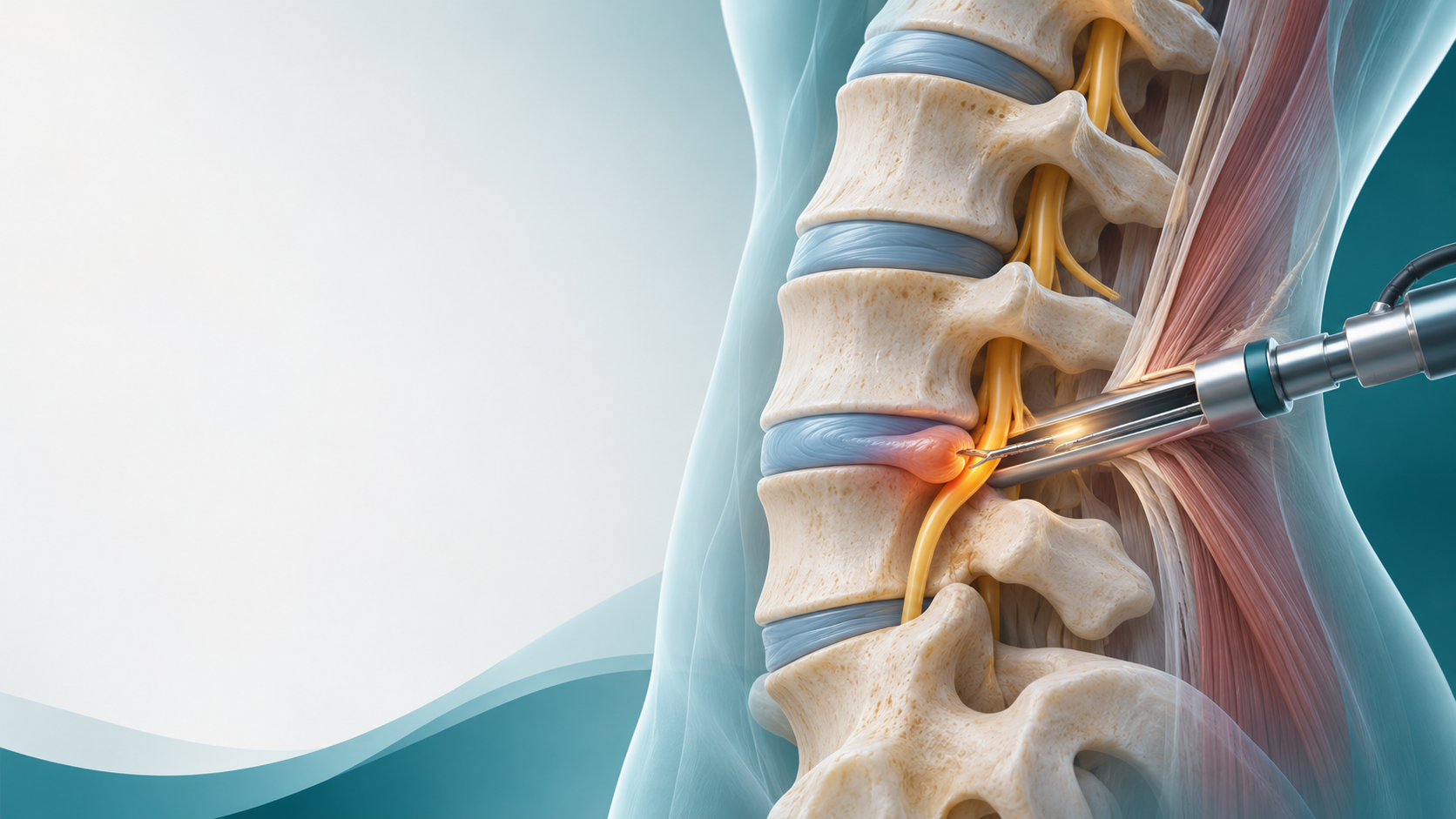
What is minimally invasive spine surgery?
These techniques use smaller incisions and instruments such as tubular retractors, an endoscope or a microscope to reach nerves or vertebrae. Depending on the diagnosis, the aim may be to relieve pressure on a nerve or stabilise part of the spine. The label alone does not define the size or suitability of an operation.
Which conditions may be considered?
Some minimally invasive approaches may be used for selected disc herniations, spinal stenosis or instability when symptoms, examination and imaging align. Guidelines advise considering decompression for sciatica when pain or function has not improved with non-surgical care and imaging findings match symptoms. An MRI finding by itself is not enough to decide on surgery.
Potential benefits and limitations
For selected patients, some approaches may reduce muscle disruption, blood loss or hospital stay, but results vary by procedure, condition and surgical team. Open surgery, another treatment or non-surgical care may be more appropriate in other cases. Minimally invasive does not necessarily mean laser, less pain or faster recovery for every patient.
How is a safe decision made?
The clinician reviews symptom duration and impact, neurological examination, scans and previous treatment, then explains options, alternatives and risks. Severe lower-back pain with new bladder or bowel difficulty, numbness around the saddle area or worsening weakness needs urgent emergency assessment. The clinic provides consultation and medical care; surgery, when indicated, is performed in hospital.
Frequently asked questions
Does minimally invasive mean only a small scar?
Incisions are often smaller, but the technique involves more than incision size and depends on the operation, anatomy and condition.
Does minimally invasive spine surgery use a laser?
Not necessarily. Many techniques use specialised instruments and visualisation; the term does not mean laser surgery.
Can every disc herniation be treated with an endoscope?
No. The level and location of the disc, symptoms, examination, imaging and surgical expertise all matter; another approach may be more suitable.
When should I seek a surgical opinion?
If symptoms persist or limit function despite non-surgical care and examination and imaging show a matching problem, a surgical opinion may be discussed.
Sources for further reading
Would you like an assessment?
Contact the clinic to arrange an appointment at a suitable branch.
Book on WhatsApp